
Let’s start with an uncomfortable truth.
If you’ve tried to learn a language in the last few years, you’ve probably been everywhere. You’ve tapped through apps with streaks and cartoon mascots. You’ve sat through classes that moved either too fast or painfully slow. You’ve bought books that promised fluency in three months and then quietly gathered dust.
And yet, despite all that effort, something still feels off.
This article is about why Anki keeps showing up in serious language learners’ toolkits—not because it’s pretty or trendy, but because it does something radically different. It adapts completely to your life, instead of forcing you to adapt to someone else’s curriculum.
If you’ve ever felt boxed in by irrelevant vocabulary, artificial lesson structures, or the constant feeling that you’re “behind,” you’re in the right place.
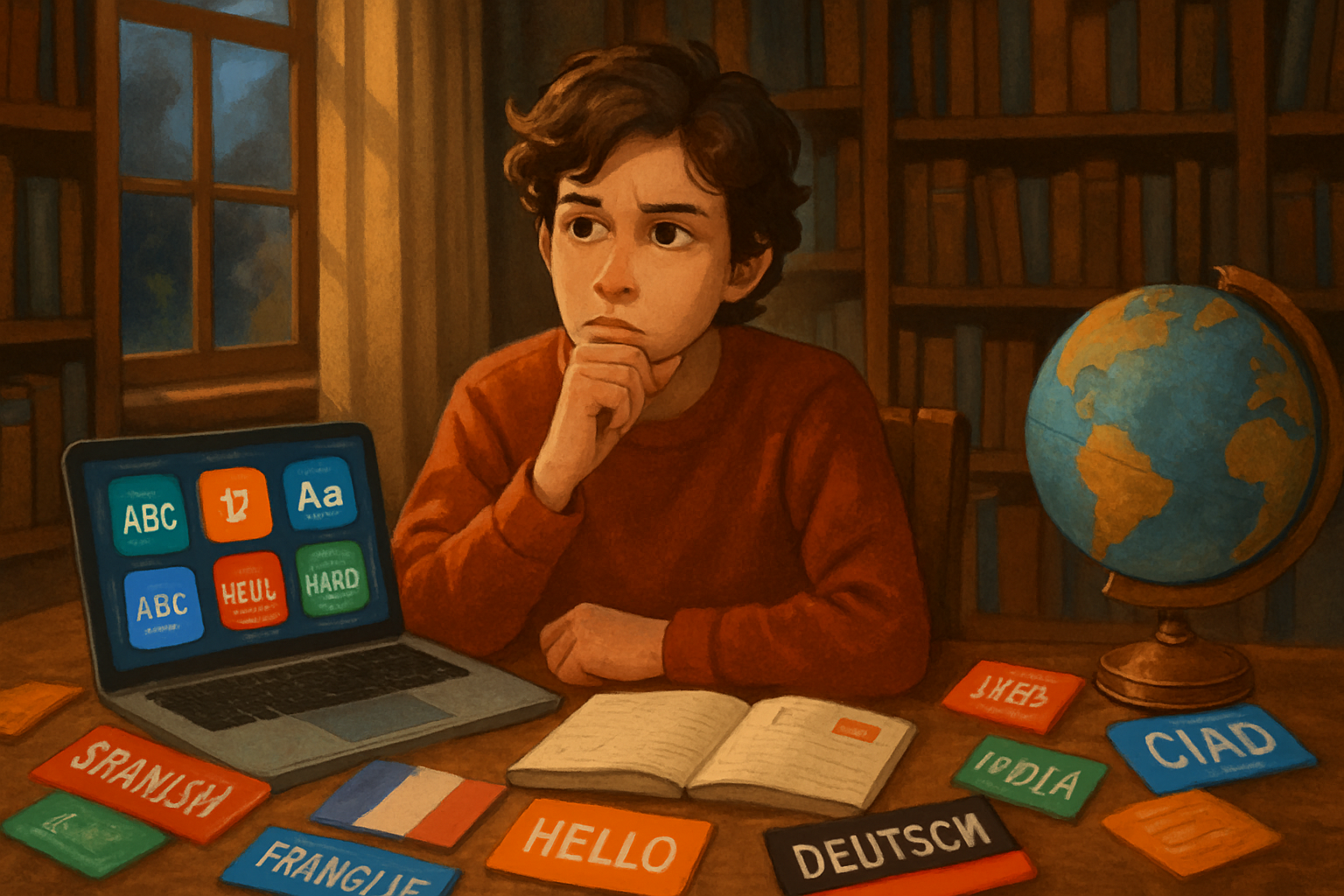
The Fundamental Problem With Most Language Learning Methods
Most language learning systems are built like railroads. You start at the beginning, you move forward in fixed steps, and you are strongly discouraged from jumping ahead or skipping stops.
The app, the textbook, or the teacher decides what you should learn first, what comes next, and how quickly you should move. Your role is to keep up. This works well in theory. In practice, it ignores the reality of adult learning.
Real people learn languages because something in their life demands it. They move abroad. They start a relationship. Their job suddenly requires meetings in another language. They get tired of smiling politely while understanding nothing.
What they need is not a perfectly ordered syllabus. What they need is relevance.
This is exactly where Anki turns the entire model upside down.
What Anki Actually Is (And Why That Matters)
Anki is not a course, a teacher, or a guided program. It doesn’t pretend to know what you should be learning next.
Anki is a spaced repetition system. Think of it as a brutally honest memory manager. You give it information, and it schedules reviews based on how well you remember that information.
There are no points, no levels, and no artificial rewards. Just a simple question, repeated endlessly: do you remember this or not?
If you do, Anki steps back. If you don’t, it brings the material back sooner. Over time, weak memories get more attention and strong memories fade into the background. This sounds almost too simple. And yet, it’s exactly why it works.
Total Personalization: You Learn What Actually Matters to You
The single greatest advantage Anki has over every other method is this: nothing enters your deck unless you put it there.
There is no predefined vocabulary list. No mandatory grammar sequence. No themed unit about ordering croissants if you don’t eat croissants.
If you live abroad, Anki quickly becomes a reflection of your daily life. An email from your landlord. A confusing sentence from your doctor. A phrase you keep hearing at work but never quite catch. Each of those moments can instantly become study material.
You are no longer “learning a language” in the abstract. You are learning how to function in your own environment.
Your interests shape the content too. If you love motorcycles, your deck fills with forum language and technical terms. If you work in tech, it fills with documentation and meeting phrases. If you’re dating in another language, you suddenly acquire emotional nuance no textbook ever dares to touch. Anki doesn’t censor. It doesn’t judge. It simply remembers what you tell it to remember.
Learning Anywhere, Anytime, With or Without Internet
Anki’s offline-first design is one of its most underrated strengths.
Your entire learning system lives on your phone. No internet connection is required to review. No login issues, no loading screens, no sudden failures because your signal dropped underground.
This matters because life happens in fragments. On public transport. In waiting rooms. On planes. In those strange five-minute gaps where doing nothing feels wasteful but starting something big feels impossible.
Anki thrives in those moments. You open the app, do a few reviews, and move on. Over weeks and months, those tiny sessions compound into real progress.
Fluency isn’t built in heroic study marathons. It’s built quietly, one remembered sentence at a time.
Ease of Use: Simpler Than Its Reputation
Anki has a reputation for being complicated, intimidating, or only suitable for “power users.” That reputation is largely undeserved. At its core, Anki requires only two actions: adding cards and reviewing cards.
You don’t need plugins. You don’t need custom layouts. You don’t need to understand every setting before you begin. You can start with a single sentence per day and let the system do its work. The complexity is optional. It’s there when you want it, not when you don’t.
Endless Customization That Grows With You
Most language learning tools eventually hit a ceiling. You finish the advanced content, and suddenly everything feels repetitive or shallow.
Anki has no ceiling.
You control how your cards look, what information they contain, and how challenging they are. Beginners might use simple word-to-translation cards. More advanced learners might work with full sentences, audio-only prompts, or missing-word exercises.
You can add screenshots from movies, audio from native speakers, or explanations written in your own words. Over time, your deck becomes a map of how your brain understands the language.
You also control the intensity. If life gets busy, you can ease off. If motivation spikes, you can push harder. There’s no system telling you that you’re “behind.”
Why Anki Quietly Outperforms Classes
Classes provide structure and accountability, but they also force everyone to move at the same pace. They spend time on material you already know and rush through things you don’t.
Anki does the opposite. It gives your weak points more attention and stops wasting time on what you’ve already mastered.
It doesn’t care if you learn five words today and fifty tomorrow. It doesn’t shame you for missing a session. It simply waits and resumes where you left off.
Why Anki Beats Language Apps
Most apps optimize for engagement. They want you to feel productive, maintain streaks, and keep opening the app.
Anki optimizes for long-term memory.
It doesn’t care if you feel good today. It cares whether you still remember that word six months from now. That difference changes everything.
Designed for Adults With Real Lives
Adults don’t learn like students. We’re busy, distracted, and often exhausted. Anki respects that reality. There are no long lessons, no guilt-driven reminders, and no artificial urgency. You show up when you can, do what you can, and move on.
Miss a day? Fine. Miss a week? Also fine. Your knowledge doesn’t reset.
The Unsexy Truth About Why Anki Works
Anki works because it strips away illusion. There is no pretending you’ve learned something because you completed a unit.
You either remember it, or you don’t.
Over time, the things you consistently remember become automatic. That’s fluency. Not finishing a course, but understanding without effort.

Final Thought: Anki Is a Tool, Not a Miracle
Anki won’t magically teach you a language on its own. You still need exposure, listening, reading, and real-world use.
But Anki is the glue that turns fleeting encounters into permanent knowledge.
Every sentence you almost understood. Every word you meant to remember. Every phrase that mattered to your life.
Anki doesn’t care where it came from.
It just makes sure it sticks.
